

YOUR FORMULATION DEVELOPMENT PARTNER Microparticles for Dermatology
& Aesthetic Applications
Build differentiated skin-focused products with precisely engineered microparticles and beads. nanoComposix supports advanced topical innovation through custom particle development and formulation optimization.


Design Considerations for Particle-Enabled Formulations
Dermatology and aesthetic formulations often require more than a standard excipient. Properties such as particle size, shape, and surface chemistry can influence formulation stability, active ingredient delivery, and final product performance. Our development team helps translate your product requirements into particle specifications.
| Development Focus | Particle Strategy |
|---|---|
| Enhanced Ingredient Delivery | Develop particle systems to support active ingredient loading, stabilization, controlled release, and tailored compatibility with final formulations. ★ Target Applications: Improve stability and delivery mechanism for sensitive actives (e.g. retinoids, antioxidants, peptides, hydrophobic ingredients)1,2 |
| Light-Responsive Technologies | Engineer particles with precise optical properties required to support photothermal, photodynamic, and other light-activated technologies. ★ Target Applications: Photothermal skin treatments, laser- or device-assisted technologies3 |
| Broad-Spectrum UV Protection & Cosmetic Elegance | Develop mineral-based particles to support UV attenuation and formulation appearance. ★ Target Applications: Mineral-based broad spectrum UV protection, tinted mineral photoprotection4,5 |
| Antimicrobial Activity | Develop silver particles with controlled ion-release and compatibility with topical formats. ★ Target Applications: Wound-care creams, gels and dressings, antimicrobial topical formulations6,7,8 |
Table 1: Example development needs and particle design strategies for dermatology and aesthetic application programs.
Connect with our Particle Development Experts
Development Support from Feasibility Through Scale-Up
- Custom particle synthesis and surface modification
- Batch-specific characterization
- Process development and scale-up expertise
- cGMP and ISO 13485 capabilities
- Made in USA
Your Partner for Particle Platform Development
Each dermatology and aesthetic formulation and application requires a unique particle design strategy. nanoComposix works with a broad portfolio of material platforms, including the examples below, to help align particle composition, size, morphology, surface chemistry, dispersion format, and optical properties with your requirements.
Silica & Mesoporous Silica
High-surface-area particles for active loading, release-profile development, stabilization, and advanced delivery innovations.1,10
Polymer Particles
Flexible carrier platforms for encapsulation, active protection, sustained-release design, and compatibility with creams, gels, serums, hydrogels, and emulsions.2
Titania & Mineral Oxides
Mineral particles supporting UV attenuation, optical scattering, opacity, tone matching, and visual appearance in topical formulations.4,5,9
Gold & Composites
Light-absorbing particles for wavelength-specific photothermal and photodynamic technology innovations.3
Silver & Composites
Engineered platforms enabling controlled silver ion-release profiles, surface chemistry tuning, and wound-care or antimicrobial topicals.6,7,8
Iron Oxide & Magnetic
Magnetic and optically responsive particles for photothermal and magnetic-responsive delivery technologies.11,12
Hydroxyapatite & Calcium Phosphates
Biomimetic mineral particles supporting polishing, skin-conditioning, biomaterials research, and hybrid hydrogel development.13
Microparticle Surface Chemistry Development
Surface chemistry can be tailored to support dispersion, active loading, hydrophobicity, oil or water compatibility, sensory feel, and particle stability in the final formulation.
-

Biofunctional surfaces: Support active ingredient (e.g., peptides, proteins, small molecules) conjugation and loading.
-

Oxide and hydroxylated surfaces: Support aqueous dispersion, charge control, chemical modification, and downstream functionalization for silica, titania, iron oxide, and related platforms.
-

Silicone-based coatings: Support hydrophobicity, slip, spreadability, and compatibility with oil-rich or anhydrous systems.
-

Organosilane and alkylsilane treatments: Tune hydrophobicity, oil dispersibility, surface reactivity, and compatibility with non-aqueous phases.
-

Fatty acid and surfactant treatments: Support wetting, dispersion, emulsion compatibility, and sensory performance in creams, lotions, oils, and mineral dispersions.
-

Polymer coatings: Support steric stabilization, active compatibility, colloidal stability, and release behavior in hydrogels, emulsions, and aqueous dispersions.
Microparticle Size, Shape & Morphology Development
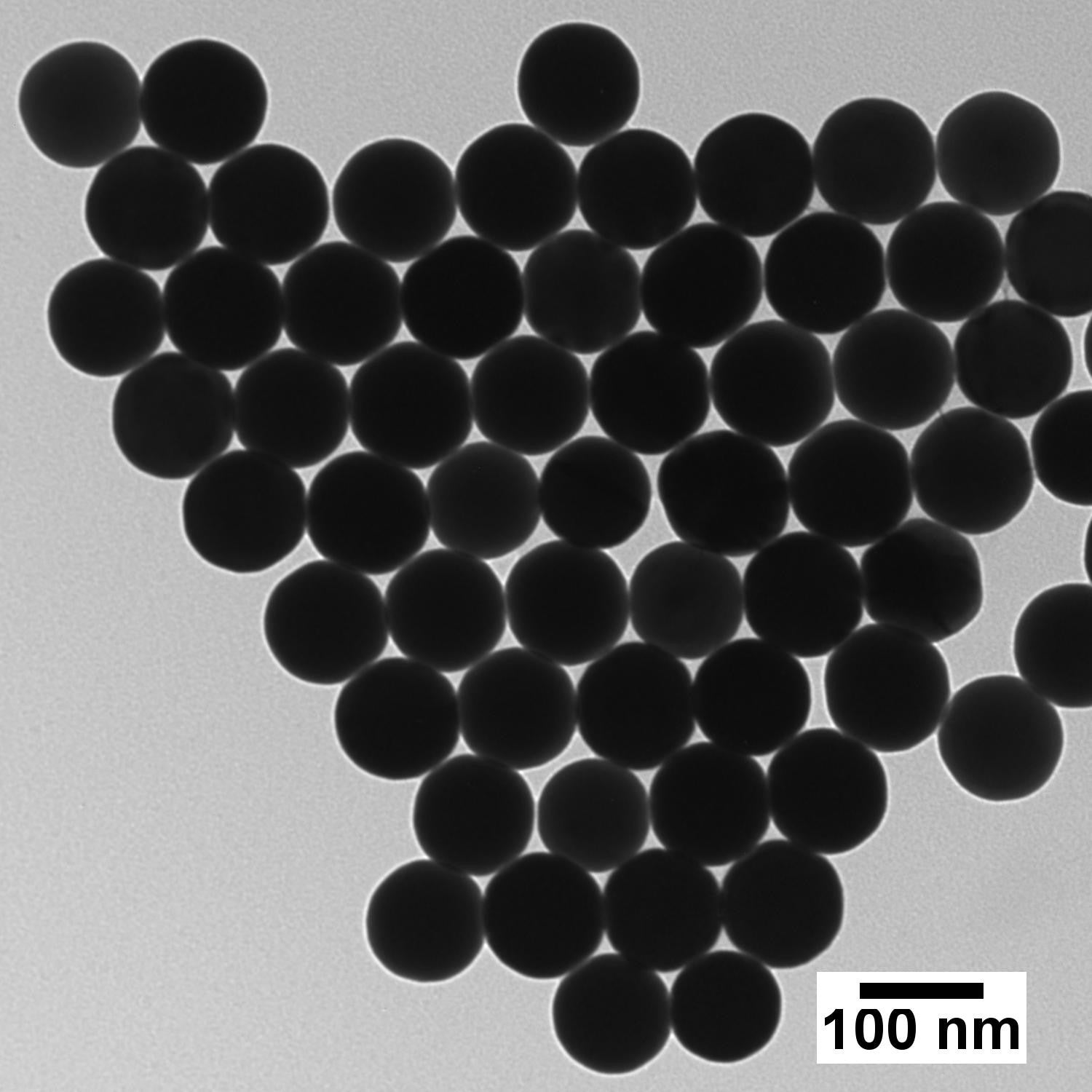
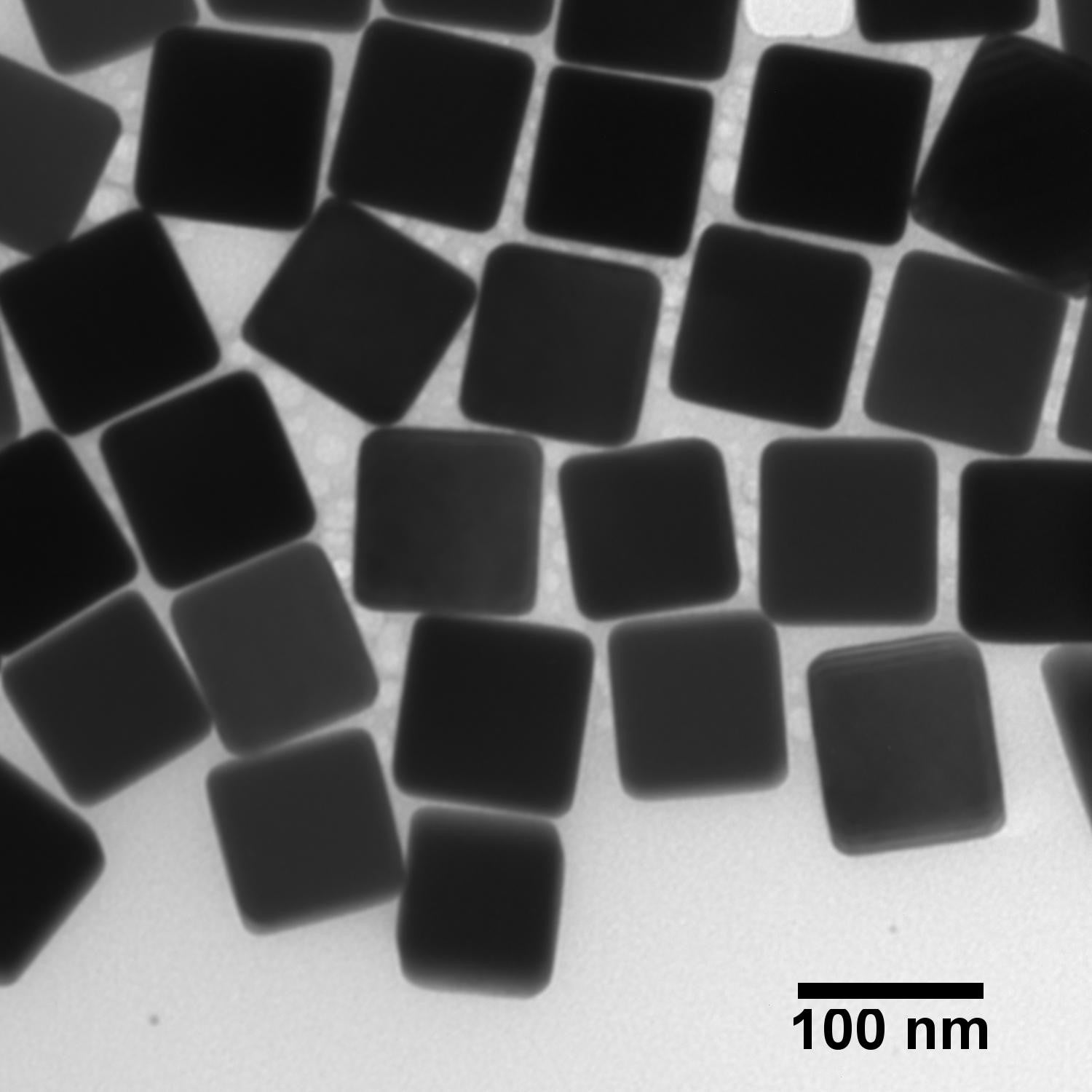
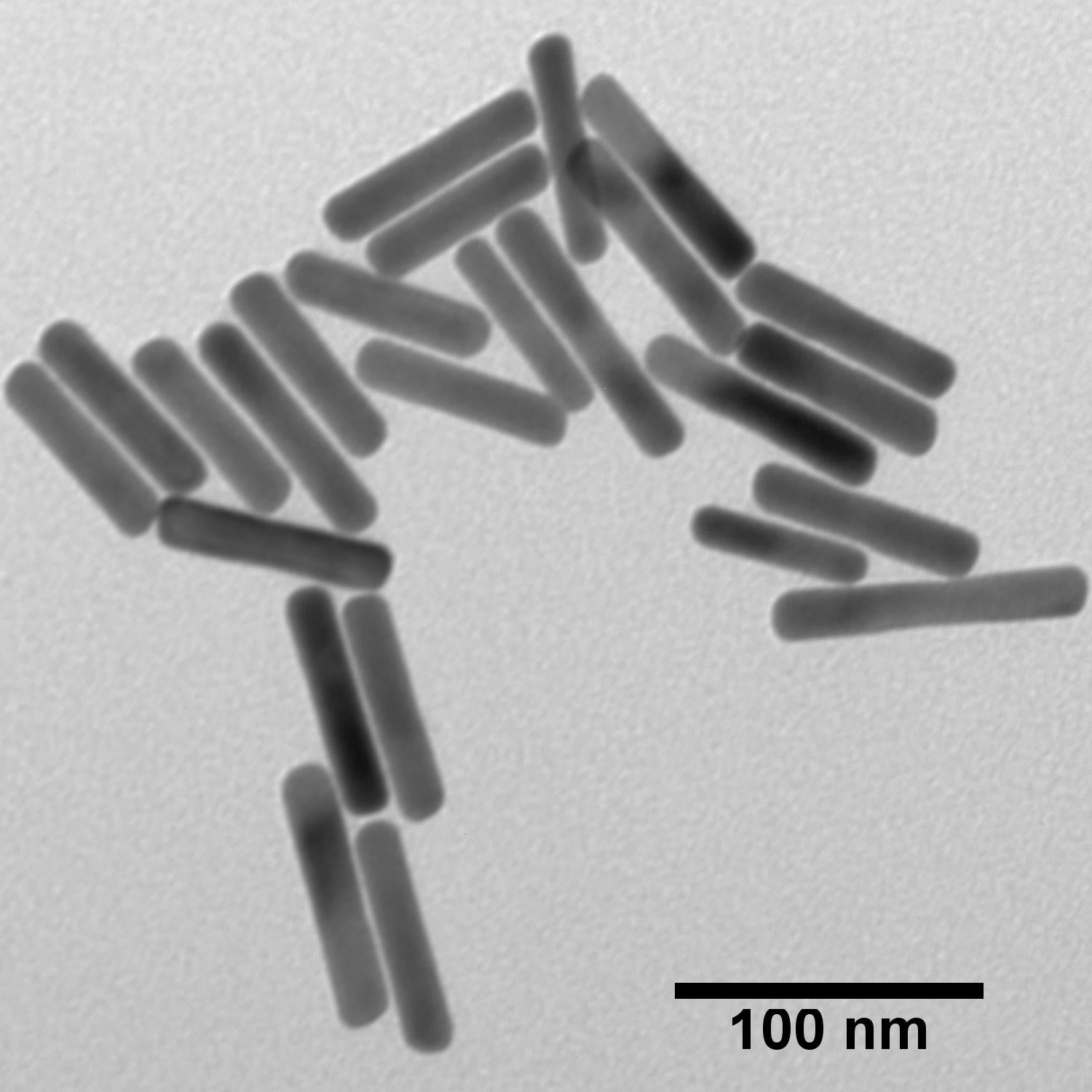
Particle dimensions and morphology can influence how a formulation looks, disperses, releases materials, interacts with light, and performs on the skin. nanoComposix can tune particle size, shape, porosity, and surface charge, to align with your development target.

Partner with nanoComposix for High-Quality Microparticle Development
Particle expertise backed by:
- 20+ years developing solutions for complex particle challenges
- ISO 13485 certification & cGMP manufacturing capabilities
- Custom synthesis, surface chemistry, and analytical characterization
- More than 4,000 scientific citations and references
FAQ: Particle Development for Dermatology and Aesthetic Applications
Can you help us select the right particle platform for a dermatology or aesthetic application?
Yes. Our team works with you to help translate your product goals into a particle design strategy based on your target application.
Do you only supply catalog particles or can you develop a custom material?
We support both catalog and custom particle programs. Many projects begin with an existing particle platform to evaluate feasibility, then move into custom development to refine composition, size, surface chemistry, concentration, dispersion medium, purity targets, or documentation package.
Can you support products with quality requirements?
nanoComposix supports custom products with a range of quality expectations. Our team can help align material design, documentation, characterization, and manufacturing controls with the intended development pathway. nanoComposix has an ISO 13485 certified Quality Management System and cGMP compliant manufacturing capabilities. Learn more about our nanomedicine CDMO services.
What characterization methods do you use?
Characterization is particle-specific, but often includes:
- Size and morphology – TEM, SEM, DLS, LDA
- Surface charge – Zeta potential
- Concentration and composition – ICP-MS, gravimetric analysis
- Optical properties – UV-Vis
- Surface chemistry – FTIR, HPLC
- Endotoxin content – Turbidimetric, LAL-based endotoxin testing
Learn more about our standard characterization methods and services.
Can particles be customized for my formulation’s pH, solvent system, or base?
Yes. We can tailor particle composition, surface chemistry, ionic strength, buffer system, solvent compatibility, and dispersion medium to align with creams, gels, serums, emulsions, hydrogels, oils, anhydrous systems, or other topical formats.
How do you approach impurity assessment?
Our team considers impurity control as part of particle processing, purification, and characterization planning. Depending on the platform and application, materials can be assessed for residual reagents, metals, microbial content, or other project-specific impurity concerns using appropriate analytical methods.
Can particles be tuned for optical or photothermal response?
Yes. nanoComposix has experience tuning the optical properties of advanced particle systems. We have specific expertise in gold, gold-silica, titania, and other materials for wavelength-specific absorption, scattering, and photothermal applications.
Case Study: Photothermal Formulation for Acne Treatment
Can you coordinate additional testing for topical or aesthetic programs?
Yes. Depending on the project, we can help coordinate with external testing resources for additional formulation, safety, stability, microbial, optical, or application-specific testing needs.
Are your materials ready for final products or clinical formulations?
Catalog nanoComposix materials are for Research Use Only and are not supplied as finished-product or clinical-grade formulation components. Our team works with you to develop particle systems tailored to your formulation requirements. Your team is responsible for final formulation validation, regulatory suitability, and product qualification.
Can you provide sterile materials?
No. nanoComposix does not provide sterile materials and does not perform aseptic processing or fill-finish operations. Sterility should be addressed through appropriate downstream processing by the customer or a qualified manufacturing partner.
References
- Costa, J. R.; et al. Silica Microparticles from Sugarcane By-Products as an Encapsulation System for Retinoids Aimed at Topical Sustained Release. Int. J. Mol. Sci. 2024, 25 (6), 3215. DOI: 10.3390/ijms25063215.
- Pan, X.; et al. Application of Nanotechnology in Anti-Aging Cosmetics: Advantages, Challenges, and Prospects. Polym. Bull. 2025. DOI: 10.1007/s00289-025-05903-3.
- Paithankar, D. Y.; et al. Acne Treatment Based on Selective Photothermolysis of Sebaceous Follicles with Topically Delivered Light-Absorbing Gold Microparticles. J. Invest. Dermatol. 2015, 135 (7), 1727–1734. DOI: 10.1038/jid.2015.89.
- Lyons, A; et al. Photoprotection beyond Ultraviolet Radiation: A Review of Tinted Sunscreens. J. Am. Acad. Dermatol. 2021, 84 (5), 1393–1397.
- Ghamarpoor, R.; Fallah, A.; Jamshidi, M. Investigating the Use of Titanium Dioxide (TiO2) Nanoparticles on the Amount of Protection against UV Irradiation. Sci. Rep. 2023, 13, 9793. DOI: 10.1038/s41598-023-37057-5.
- Tharani, M.; Shanmugam, R. Enhancing Wound Healing with Nanoparticle-Infused Hydrogels: A Review of Current Applications and Future Prospects. Discov. Biotechnol. 2025, 2, 34. DOI: 10.1007/s44340-025-00030-1.
- Pathi, B. K.; et al. Effect of Topical Silver Nanoparticle Formulation on Wound Bacteria Clearance and Healing in Patients with Infected Wounds Compared to Standard Topical Antibiotic Application: A Randomized Open-Label Parallel Clinical Trial. Cureus 2024, 16 (5), e60569. DOI: 10.7759/cureus.60569.
- Kaya, M.; et al. Recent Advances of Silver Nanoparticles in Wound Healing: Evaluation of In Vivo and In Vitro Studies. Int. J. Mol. Sci. 2025, 26 (20), 9889.
- Raszewska-Famielec, M.; Flieger, J. Nanoparticles for Topical Application in the Treatment of Skin Dysfunctions—An Overview of Dermo-Cosmetic and Dermatological Products. Int. J. Mol. Sci. 2022, 23 (24), 15980. DOI: 10.3390/ijms232415980.
- Kolimi, P.; et al. A Systemic Review on Development of Mesoporous Nanoparticles as a Vehicle for Transdermal Drug Delivery. Nanotheranostics 2023, 7 (1), 70–89. DOI: 10.7150/ntno.77395.
- Amatya, R.; Kim, D.; Min, K. A.; Shin, M. C. Iron Oxide Nanoparticles-Loaded Hydrogels for Effective Topical Photothermal Treatment of Skin Cancer. J. Pharm. Investig. 2022, 52 (6), 775–785. DOI: 10.1007/s40005-022-00593-9.
- Abdoh, A.; et al. Stimuli-Responsive Smart Nanocarriers for Skin Drug Delivery. Int. J. Pharm. 2025, 126534. DOI: 10.1016/j.ijpharm.2025.126534.
- COSMILE Europe. Hydroxyapatite. COSMILE Europe Ingredient Database.