
Nanomaterials can provide optical and structural properties that differ substantially from their bulk counterparts. By controlling particle size, shape, composition, and uniformity, engineers can tune light absorption, scattering, refractive behavior, conductivity, and physical spacing within advanced display and optical architectures.
The examples below show how precisely engineered nanomaterials can support display technologies ranging from liquid-crystal cell spacing and transparent electrodes to plasmonic color and antireflective coatings.
Engineering nanomaterials into an optical system?
Explore particle strategies for coatings, displays, sensing, spectroscopy, imaging, and other optical technologies.
Cell Gap Spacers
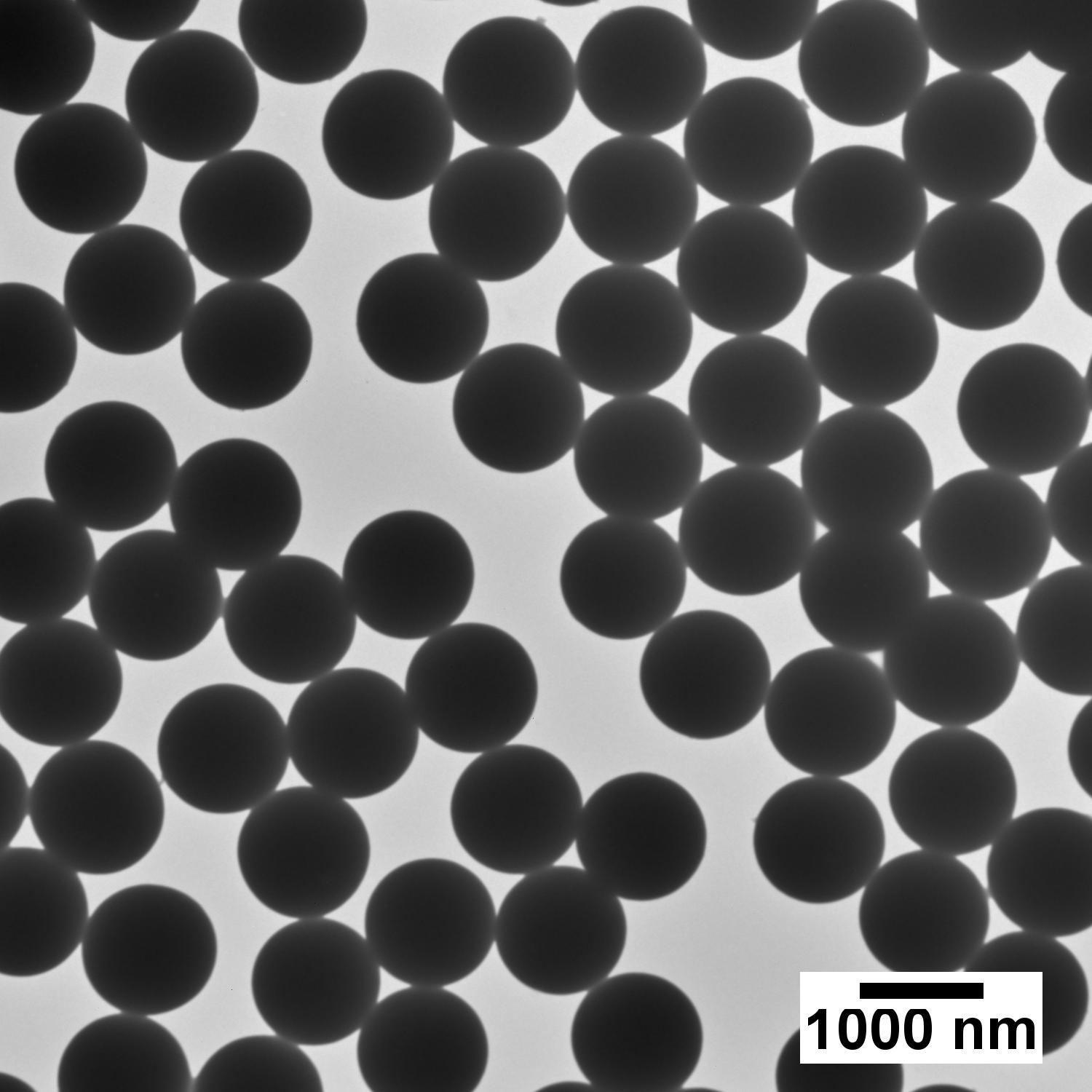
Monodisperse silica microspheres can serve as cell gap spacers in liquid-crystal display architectures, helping maintain consistent separation between substrates. Tight control of particle diameter and sphericity supports uniform cell thickness and reduces variation in the optical path across the display.
Particle size distribution is particularly important in this application because oversized or undersized particles can introduce local variations in cell spacing.
Case Study
A display manufacturer evaluating silica particles from multiple suppliers selected nanoComposix materials for their narrow size distribution, spherical morphology, and consistency. The particles supported uniform cell gap spacing across prototype displays.
Transparent Conductive Films
Silver nanowire networks can combine electrical conductivity, optical transmission, and mechanical flexibility, making them useful for transparent electrodes in touchscreens and flexible displays. Nanowire diameter, length, aspect ratio, and network density influence sheet resistance, transmission, haze, and mechanical performance.
Long, thin nanowires can support high transmission with relatively low haze, while network density must be balanced against conductivity and optical clarity.

Literature Example
Tao et al. studied how silver nanowire diameter, length, and density influence transparent conductive film performance. By varying these structural parameters, they produced films with transmittance above 80% and sheet resistance below 75 Ω/sq, while haze at 550 nm could be tuned from approximately 1% to 25%. The work demonstrates how nanowire morphology can be engineered for different transparency, conductivity, and haze requirements.
Tao, J.; Liu, N.; Li, S.; Shi, J.; Ji, S. “Structural manipulation of silver nanowire transparent conductive films for optoelectrical property optimization in different application fields.” Thin Solid Films 2021, 729, 138679.
Plasmonic Color & Optical Coatings
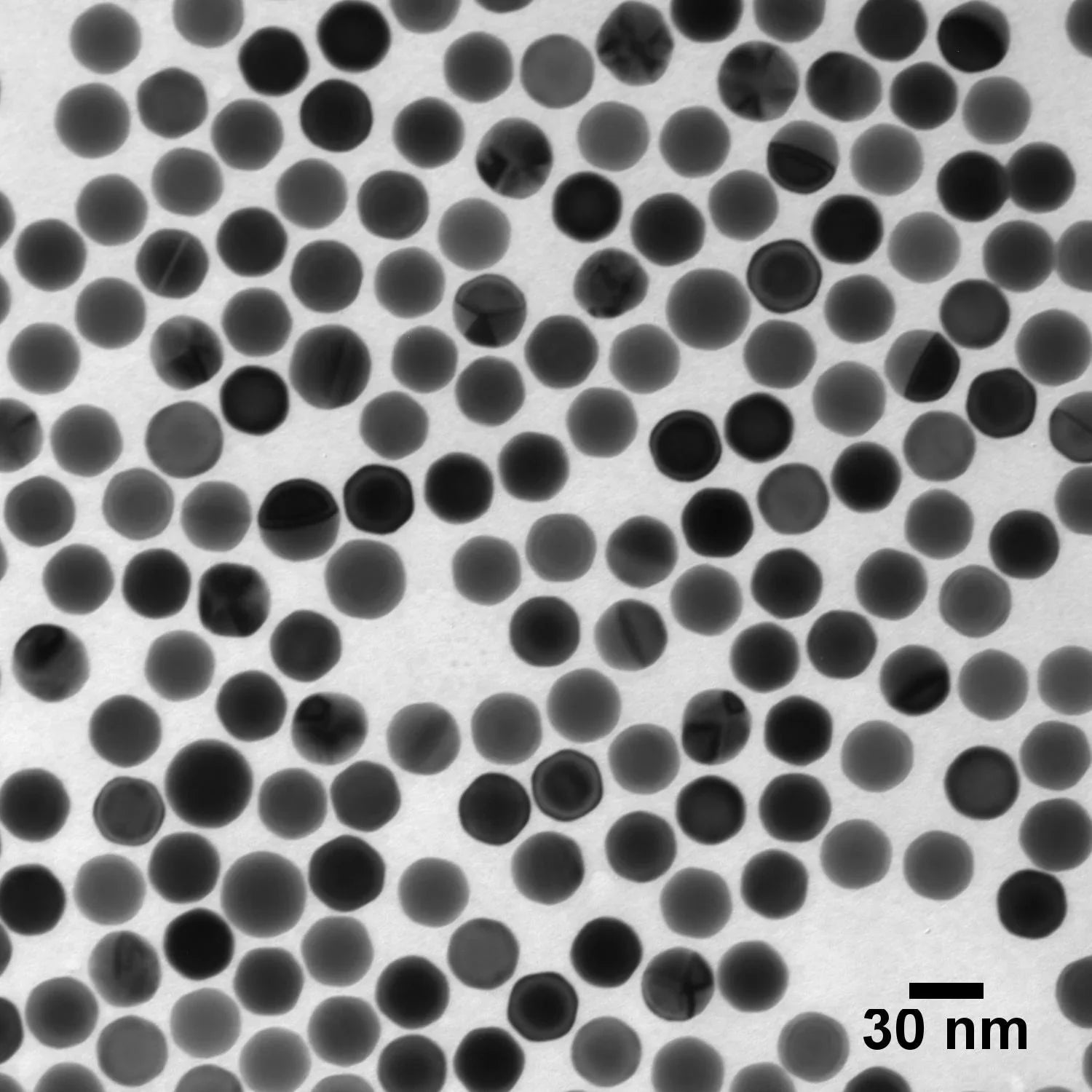
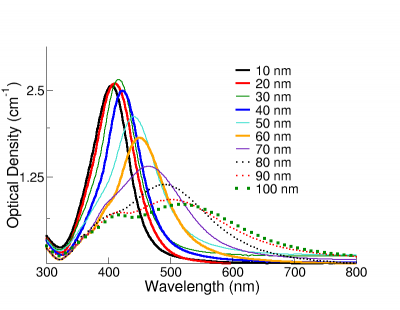
Gold and silver nanoparticles exhibit size- and shape-dependent localized surface plasmon resonances that provide tunable absorption and scattering across the visible spectrum. This spectral control can be used to engineer color, optical filtering, and other wavelength-selective responses in coatings and display-related architectures.
Uniform particle size and morphology are particularly important when a narrow, reproducible optical response is required. Learn more about the underlying behavior in The Science of Plasmonics.
Gold Nanoparticle Spectra

Silver Nanoparticle Spectra
Case Study
A mobile-device manufacturer needed plasmonic particles for a colored coating on polycarbonate. nanoComposix developed particles that distributed uniformly across the substrate, producing homogeneous color that remained stable during extended UV exposure.
Antireflective Coatings
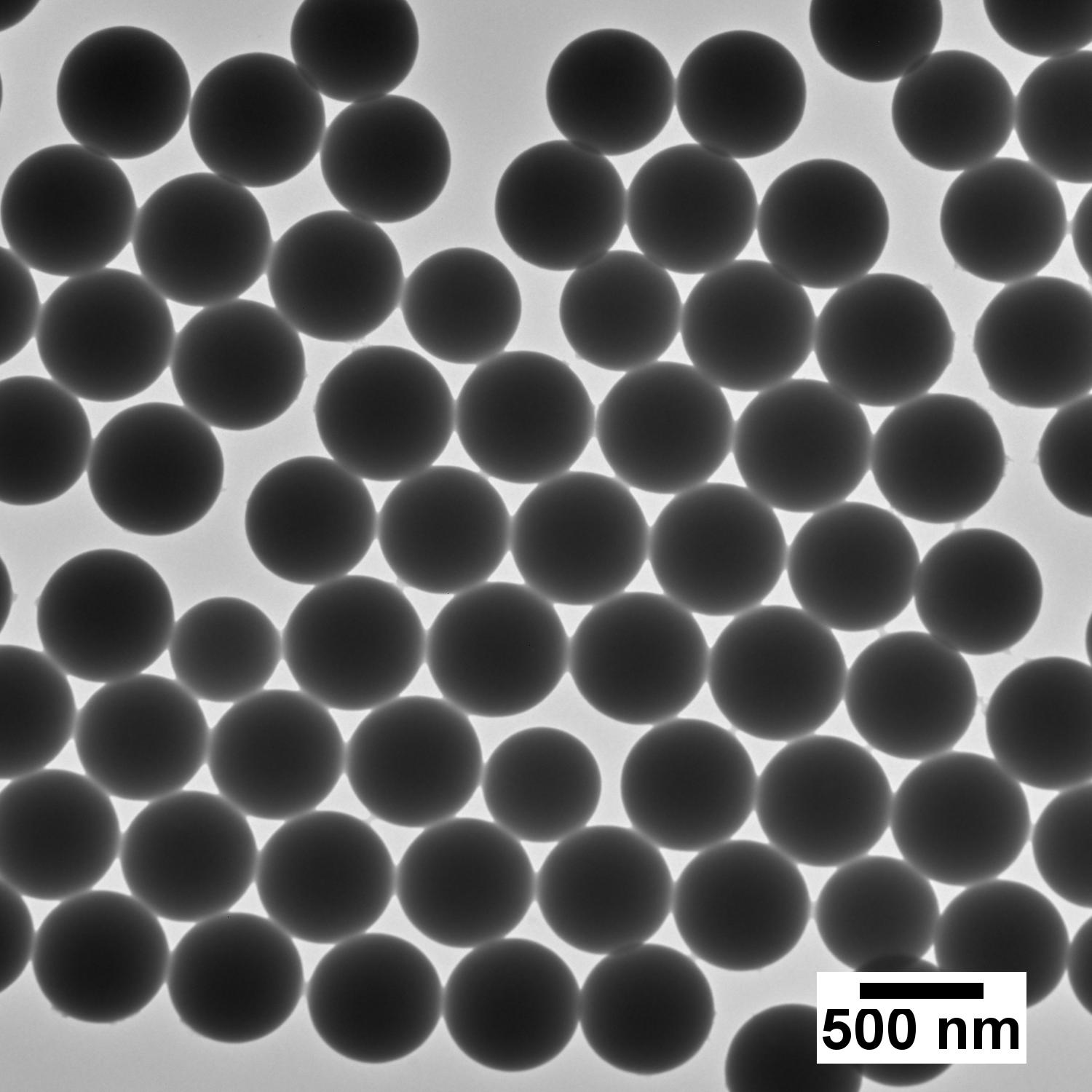
Silica nanoparticles can be used to engineer low-effective-refractive-index surfaces that reduce reflection and improve optical transmission. Particle size, uniformity, packing, and deposition conditions influence the resulting coating structure and optical response.
Monodisperse silica particles are particularly useful when reproducible assembly and controlled subwavelength surface structures are required.
Literature Example
Tao et al. demonstrated broadband antireflective coatings using monolayers of 100 nm silica nanospheres assembled on glass. Coating both sides of the substrate produced a maximum transmittance of 99% at 560 nm. The transmission peak could also be shifted across the UV-visible range by changing deposition parameters, demonstrating how controlled nanoparticle assembly can tune antireflective behavior.
Tao, F.; Hiralal, P.; Ren, L.; Wang, Y.; Dai, Q.; Amaratunga, G. A. J.; Zhou, H. “Tuning the Peak Position of Subwavelength Silica Nanosphere Broadband Antireflection Coatings.” Nanoscale Research Letters 2014, 9, 361.
Developing a display or optical material with specific performance requirements?
Talk with our technical team about particle size, uniformity, composition, optical response, formulation, and integration into your system.